
Wheel of the Year
The Way of Ash and Elm is an eclectic approach that uses a modified version of the Wheel of the Year, one that specifically mixes elements of Atheopaganism and Humanistic Heathenry (as the holiday names will attest). The rationale for observing the Wheel of the Year is two-fold:
- Marks the actual, physical changes in the seasons — observing shifts in light, temperature, plant and animal life, and human activity.
- Serves as a symbolic cycle of life — with each point representing a stage from conception to death (and renewal), while keeping the imagery grounded in metaphor rather than supernatural belief.
Furthermore, The Way of Ash and Elm frames the Wheel of the Year so that one half focuses on the darker forces of life and the other half on the lighter forces, without framing either as “good” or “bad,” but as equally essential parts of a natural, human, and mythically symbolic cycle. As we are located in New England, our approach reflects the seasonal changes that occur in our area. Those living in a different ecology or in the Southern Hemisphere will understandably want to adjust the wheel for their own seasonal experiences.
The Two Halves of the Humanist Heathen Year
The Dark Half
— Winter Finding / Autumn Equinox → Brightening / Dísablót
Themes: Decline, loss, fear, introspection, rest, and transformation.
- This is not about “evil” or “bad” forces — it’s about the natural processes of decay, uncertainty, and stillness that make renewal possible.
- In a Humanist Heathen view, these forces are part of the wyrd (interconnection) of life — they shape us as much as joy or growth.
Seasonal progression:
- Winter Finding / Autumn Equinox – Acknowledgement of balance shifting toward darkness. Recognize life slowing and the harvest ending.
- Winter Nights / Alfablót – Death and remembrance. Confront mortality directly, honor the dead, and release what has run its course.
- Yule / Winter Solstice – Deep stillness. The darkness is longest here — yet it carries the spark of renewal. Reflect, dream, and plant the seeds of intention in quiet.
- Brightening / Dísablót – Preparation for return. First signs of light and growth appear; we start to ready ourselves for the work ahead.
Psychological work in the dark half:
- Facing fears: Acknowledge anxieties and uncertainties rather than denying them.
- Letting go: Practice releasing habits, relationships, or roles that no longer serve you.
- Resting deeply: Understand that stillness is productive; it’s the composting phase of the soul.
- Drawing inward: Use quiet seasons for reflection, journaling, and deeper emotional processing.
The Light Half
— Summer Finding / Spring Equinox → Dimming
Themes: Growth, vitality, joy, creation, and outward engagement.
- Here, energy rises, life expands, and possibilities open.
- In Humanist Heathenism, these are times to act in the world — plant, build, teach, celebrate, and connect.
Seasonal progression:
- Summer Finding / Spring Equinox – Balance returning toward light. Welcome visible renewal and set plans in motion.
- Sigurblót – Vitality and joy. Celebrate love, beauty, and the playful side of life.
- Midsummer / Summer Solstice – Full strength. Recognize your own power and take bold steps toward your goals.
- Dimming – Responsibility and gratitude. Share abundance, honor your work, and prepare for the coming shift back toward darkness.
Psychological work in the light half:
- Taking action: Build, grow, and create in the physical world.
- Connection: Strengthen bonds with community and the land.
- Celebration: Make space for joy and play as essential parts of life.
- Generosity: Share what you have learned and cultivated with others.
Why This Matters for a Humanist Heathen:
- No moral dualism: Dark and light are not “good vs. evil,” but complementary forces in nature and human life.
- Natural grounding: The cycle mirrors observable seasonal change, giving you an anchor in the real world.
- Mythic metaphor: Norse imagery can embody these forces — Helheim and Niflheim for the dark half; Vanaheim and Álfheim for the light half — without assuming supernatural beings are real.
- Self-awareness: Following this pattern helps you see where you are emotionally and physically in the year’s ebb and flow, and adjust accordingly.
Our Approach
Found below is The Way of Ash and Elm’s version of the Humanist Heathen Wheel of the Year. It is an approach that merges:
- Seasonal change (nature’s cycle)
- Life stages (conception → death)
- Nine Worlds meditations (symbolic Norse cosmology)
- Dark and light forces as natural, necessary complements
Why This Works for a Humanist Heathen:
- Nature as sacred: The focus is on the tangible: the turning of the earth, the seasons, and our relationship to them.
- Myth as metaphor: Norse or other mythic imagery can be layered onto each stage, but not taken literally.
- Life cycle reminder: Moving through the year mirrors our own lives, helping us reflect on where we are and what’s next.
- Grounded awe: You can feel reverence without requiring the supernatural — the cycle itself is enough.
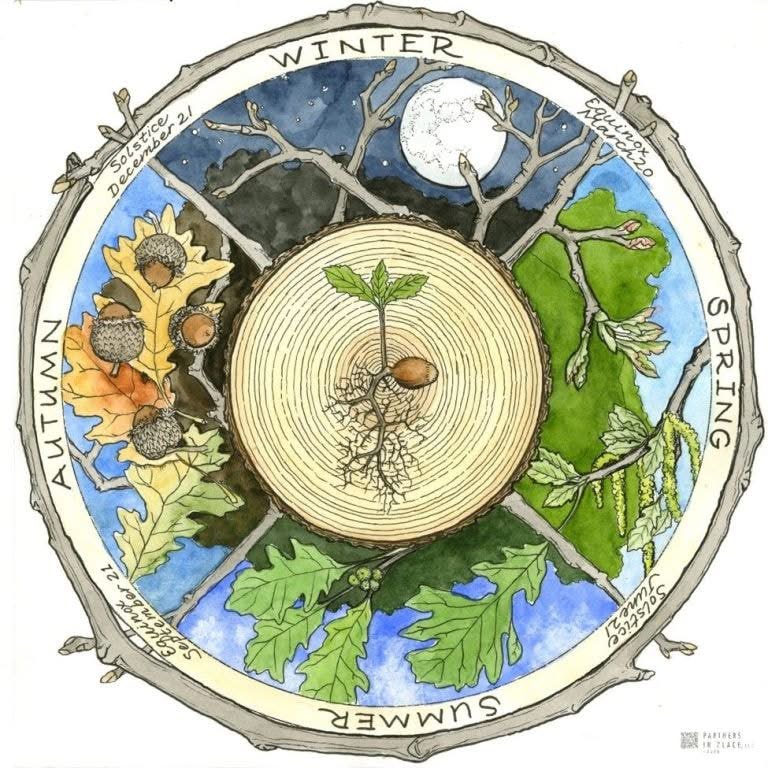
Wheel of the Year
1. Yule / Winter Solstice – Conception
- Nature: The longest night, when the sun begins its return. Stillness, rest, and the promise of light.
- Life stage: Conception — a hidden spark of potential. The seed of life exists but has not yet emerged, like conception in the womb or the spark of a new idea.
- Nine Worlds meditation: Niflheimr — Rest and stillness, holding the seed of what will come.
- Dark half focus: Finding hope in the depths of darkness.
- Practice: Gather in warmth and community, light candles, and reflect on intentions for the year ahead.
2. Brightening / Dísablót – Gestation
- Nature: Early signs of change — days lengthen, first shoots appear, animals prepare for birthing.
- Life stage: Gestation — development beneath the surface, unseen but vital.
- Nine Worlds meditation: Muspelheimr — Warming the spark into readiness for action.
- Dark half focus: Quiet preparation before action.
- Practice: Honor female ancestors and fertility; begin projects quietly; clear space for growth; honor patience and preparation.
3. Summer Finding / Spring Equinox – Birth
- Nature: Day and night balanced; plants emerge; migrations begin.
- Life stage: Birth — emergence into the world.
- Nine Worlds meditation: Vanaheimr — Nurturing growth and harmonizing with life’s rhythms.
- Light half focus: Taking first steps into the new season.
- Practice: Spend time outdoors noticing new life; celebrate fresh starts and the courage to “arrive” in the world; celebration children.
4. Sigurblót / May Day – Youth
- Nature: Blossoming, mating season, vibrant colors, and abundance of energy.
- Life stage: Youth — playfulness, curiosity, and exploration.
- Nine Worlds meditation: Álfheimr — Wonder, beauty, and creativity.
- Light half focus: Celebration and play as life force.
- Practice: Actively work for a better world; celebrate joy through dance, music, and feasting; create art, and revel in physicality and joy.
5. Midsummer / Summer Solstice – Adulthood
- Nature: Longest day, plants at full strength, warmth at its height.
- Life stage: Adulthood — maturity, peak vitality, and creative power.
- Nine Worlds meditation: Ásgarðr — Clarifying purpose and committing to high goals.
- Light half focus: Committing to your highest goals.
- Practice: Recommit to personal goals, celebrate achievements, and share your energy with others.
6. Dimming / First Harvest – Responsibility
- Nature: First crops are gathered; work is steady and intentional.
- Life stage: Responsibility — providing for others, creating security, tending what you’ve built.
- Nine Worlds meditation: Svartálfaheimr — Craft, creation, and skill.
- Light half focus: Sharing abundance, teaching, and building resilience.
- Practice: Bake bread, share food, make or repair something important; share skills, teach, give back to your community, and appreciate what you have built.
7. Winter Finding / Autumn Equinox – Elderhood
- Nature: Day and night balanced again, but darkness begins to grow; harvest nearing completion; leaves turn.
- Life stage: Elderhood — wisdom, reflection, mentorship, and a slower pace.
- Nine Worlds meditation: Midgarðr — Grounding in everyday life and human connection.
- Dark half focus: Acknowledging change, preparing for decline.
- Practice: Share stories, mentor others, preserve knowledge, give thanks for what you have, enjoy the fruits of earlier work, and live deliberately.
8. Winter Nights / Alfablót – Death
- Nature: The harvest is complete; fields are bare; dark deepens.
- Life stage: Death, endings, and transformation — release, remembrance, and transformation.
- Nine Worlds meditation: Helheimr — Memory and acceptance.
- Dark half focus: Facing mortality and loss without fear.
- Practice: Remember and honor those who have died; release what no longer serves you; reflect on the impermanence of all things.
Floating Meditation — Jötunheimr (Challenge)
- Use: For challenges at any time of year. Use whenever you need courage and adaptability, regardless of the season.
- Nature: Storms, sudden frosts, or any personal difficulty that arises during the year.
- Life stage: Trials — meeting challenges with resilience.
- Nine Worlds meditation: Jötunheimr — Facing obstacles and learning from them.
- Why it’s floating: Hardship doesn’t obey seasonal boundaries; it can teach lessons in both halves of the year.
 The Way of Ash and Elm