Wheel of the Year

Wheel of the Year

The Way of Ash and Elm is an eclectic approach that uses a modified version of the Wheel of the Year, one that specifically mixes elements of Atheopaganism and Humanistic Heathenry (as the holiday names will attest). The rationale for observing the Wheel of the Year is two-fold:

  1. Marks the actual, physical changes in the seasons — observing shifts in light, temperature, plant and animal life, and human activity.
  2. Serves as a symbolic cycle of life — with each point representing a stage from conception to death (and renewal), while keeping the imagery grounded in metaphor rather than supernatural belief.

Furthermore, The Way of Ash and Elm frames the Wheel of the Year so that one half focuses on the darker forces of life and the other half on the lighter forces, without framing either as “good” or “bad,” but as equally essential parts of a natural, human, and mythically symbolic cycle. As we are located in New England, our approach reflects the seasonal changes that occur in our area. Those living in a different ecology or in the Southern Hemisphere will understandably want to adjust the wheel for their own seasonal experiences.

The Two Halves of the Humanist Heathen Year

The Dark Half

 — Winter Finding / Autumn Equinox → Brightening / Dísablót

Themes: Decline, loss, fear, introspection, rest, and transformation.

  • This is not about “evil” or “bad” forces — it’s about the natural processes of decay, uncertainty, and stillness that make renewal possible.
  • In a Humanist Heathen view, these forces are part of the wyrd (interconnection) of life — they shape us as much as joy or growth.

Seasonal progression:

  1. Winter Finding / Autumn Equinox – Acknowledgement of balance shifting toward darkness. Recognize life slowing and the harvest ending.
  2. Winter Nights / Alfablót – Death and remembrance. Confront mortality directly, honor the dead, and release what has run its course.
  3. Yule / Winter Solstice – Deep stillness. The darkness is longest here — yet it carries the spark of renewal. Reflect, dream, and plant the seeds of intention in quiet.
  4. Brightening / Dísablót – Preparation for return. First signs of light and growth appear; we start to ready ourselves for the work ahead.

Psychological work in the dark half:

  • Facing fears: Acknowledge anxieties and uncertainties rather than denying them.
  • Letting go: Practice releasing habits, relationships, or roles that no longer serve you.
  • Resting deeply: Understand that stillness is productive;  it’s the composting phase of the soul.
  • Drawing inward: Use quiet seasons for reflection, journaling, and deeper emotional processing.

The Light Half

 — Summer Finding / Spring Equinox → Dimming

Themes: Growth, vitality, joy, creation, and outward engagement.

  • Here, energy rises, life expands, and possibilities open.
  • In Humanist Heathenism, these are times to act in the world — plant, build, teach, celebrate, and connect.

Seasonal progression:

  1. Summer Finding / Spring Equinox – Balance returning toward light. Welcome visible renewal and set plans in motion.
  2. Sigurblót – Vitality and joy. Celebrate love, beauty, and the playful side of life.
  3. Midsummer / Summer Solstice – Full strength. Recognize your own power and take bold steps toward your goals.
  4. Dimming – Responsibility and gratitude. Share abundance, honor your work, and prepare for the coming shift back toward darkness.

Psychological work in the light half:

  • Taking action: Build, grow, and create in the physical world.
  • Connection: Strengthen bonds with community and the land.
  • Celebration: Make space for joy and play as essential parts of life.
  • Generosity: Share what you have learned and cultivated with others.

Why This Matters for a Humanist Heathen:

  • No moral dualism: Dark and light are not “good vs. evil,” but complementary forces in nature and human life.
  • Natural grounding: The cycle mirrors observable seasonal change, giving you an anchor in the real world.
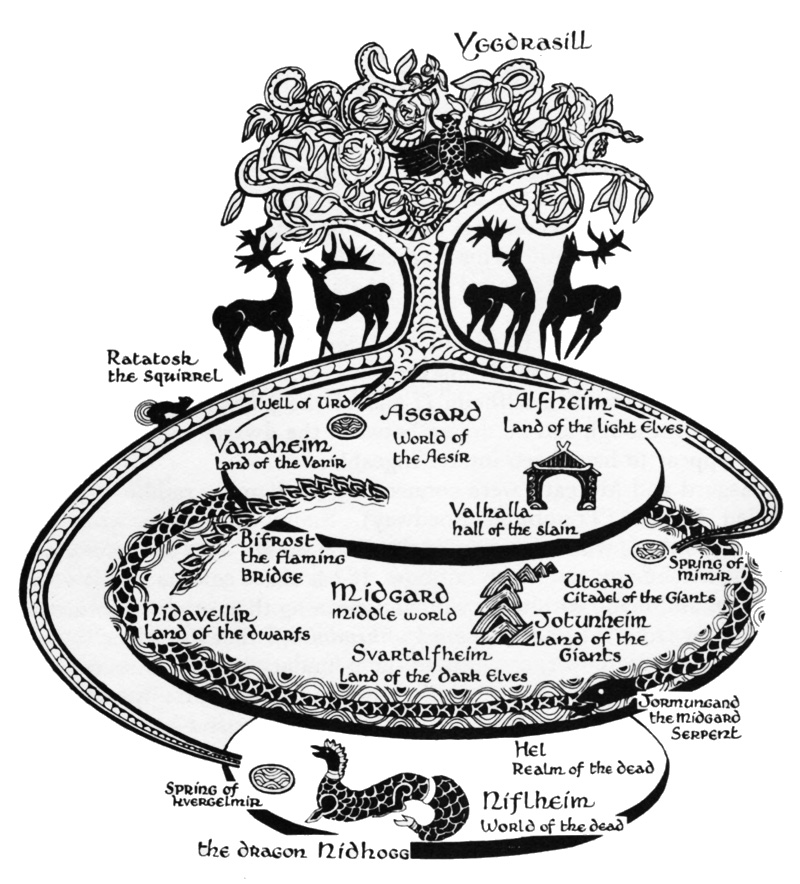
  • Mythic metaphor: Norse imagery can embody these forces — Helheim and Niflheim for the dark half; Vanaheim and Álfheim for the light half — without assuming supernatural beings are real.
  • Self-awareness: Following this pattern helps you see where you are emotionally and physically in the year’s ebb and flow, and adjust accordingly.

Our Approach

Found below is The Way of Ash and Elm’s version of the Humanist Heathen Wheel of the Year. It is an approach that merges:

  1. Seasonal change (nature’s cycle)
  2. Life stages (conception → death)
  3. Nine Worlds meditations (symbolic Norse cosmology)
  4. Dark and light forces as natural, necessary complements

Why This Works for a Humanist Heathen:

  • Nature as sacred: The focus is on the tangible: the turning of the earth, the seasons, and our relationship to them.
  • Myth as metaphor: Norse or other mythic imagery can be layered onto each stage, but not taken literally.
  • Life cycle reminder: Moving through the year mirrors our own lives, helping us reflect on where we are and what’s next.
  • Grounded awe: You can feel reverence without requiring the supernatural — the cycle itself is enough.
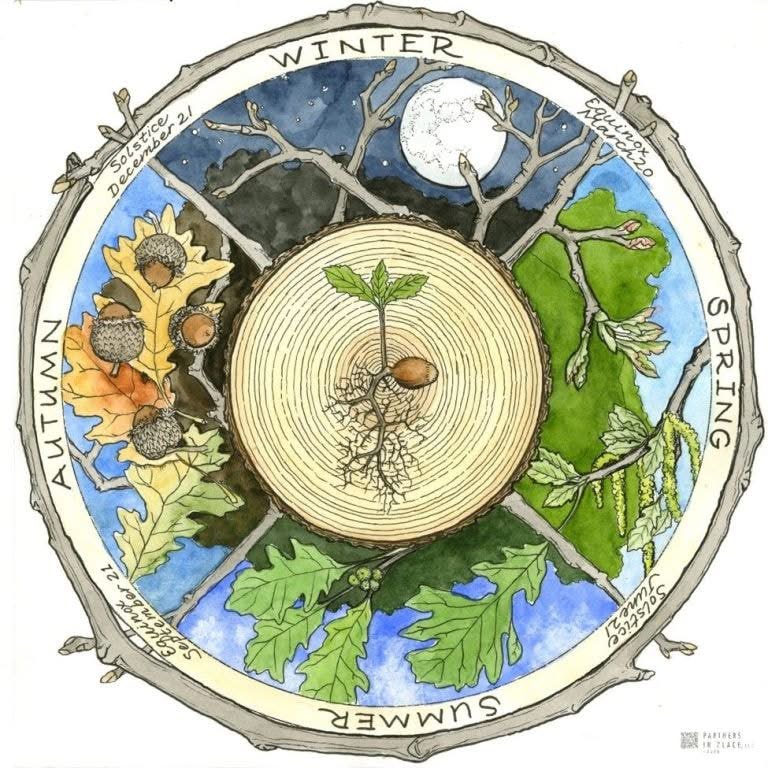
Wheel of the Year

1. Yule / Winter Solstice – Conception

  • Nature: The longest night, when the sun begins its return. Stillness, rest, and the promise of light.
  • Life stage: Conception — a hidden spark of potential. The seed of life exists but has not yet emerged, like conception in the womb or the spark of a new idea.
  • Nine Worlds meditation: Niflheimr — Rest and stillness, holding the seed of what will come.
  • Dark half focus: Finding hope in the depths of darkness.
  • Practice: Gather in warmth and community, light candles, and reflect on intentions for the year ahead.

2. Brightening / Dísablót – Gestation

  • Nature: Early signs of change — days lengthen, first shoots appear, animals prepare for birthing.
  • Life stage: Gestation — development beneath the surface, unseen but vital.
  • Nine Worlds meditation: Muspelheimr — Warming the spark into readiness for action.
  • Dark half focus: Quiet preparation before action.
  • Practice: Honor female ancestors and fertility; begin projects quietly; clear space for growth; honor patience and preparation.

3. Summer Finding / Spring Equinox – Birth

  • Nature: Day and night balanced; plants emerge; migrations begin.
  • Life stage: Birth — emergence into the world.
  • Nine Worlds meditation: Vanaheimr — Nurturing growth and harmonizing with life’s rhythms.
  • Light half focus: Taking first steps into the new season.
  • Practice: Spend time outdoors noticing new life; celebrate fresh starts and the courage to “arrive” in the world; celebration children.

4.  Sigurblót / May Day – Youth

  • Nature: Blossoming, mating season, vibrant colors, and abundance of energy.
  • Life stage: Youth — playfulness, curiosity, and exploration.
  • Nine Worlds meditation: Álfheimr — Wonder, beauty, and creativity.
  • Light half focus: Celebration and play as life force.
  • Practice: Actively work for a better world; celebrate joy through dance, music, and feasting; create art, and revel in physicality and joy.

5. Midsummer / Summer Solstice – Adulthood

  • Nature: Longest day, plants at full strength, warmth at its height.
  • Life stage: Adulthood —  maturity, peak vitality, and creative power.
  • Nine Worlds meditation: Ásgarðr — Clarifying purpose and committing to high goals.
  • Light half focus: Committing to your highest goals.
  • Practice: Recommit to personal goals, celebrate achievements, and share your energy with others.

6. Dimming / First Harvest – Responsibility

  • Nature: First crops are gathered; work is steady and intentional.
  • Life stage: Responsibility — providing for others, creating security, tending what you’ve built.
  • Nine Worlds meditation: Svartálfaheimr — Craft, creation, and skill.
  • Light half focus: Sharing abundance, teaching, and building resilience.
  • Practice: Bake bread, share food, make or repair something important; share skills, teach, give back to your community, and appreciate what you have built.

7. Winter Finding / Autumn Equinox – Elderhood

  • Nature: Day and night balanced again, but darkness begins to grow; harvest nearing completion; leaves turn.
  • Life stage: Elderhood — wisdom, reflection, mentorship, and a slower pace.
  • Nine Worlds meditation: Midgarðr — Grounding in everyday life and human connection.
  • Dark half focus: Acknowledging change, preparing for decline.
  • Practice: Share stories, mentor others, preserve knowledge, give thanks for what you have, enjoy the fruits of earlier work, and live deliberately.

8. Winter Nights / Alfablót – Death

  • Nature: The harvest is complete; fields are bare; dark deepens.
  • Life stage: Death, endings, and transformation — release, remembrance, and transformation.
  • Nine Worlds meditation: Helheimr — Memory and acceptance.
  • Dark half focus: Facing mortality and loss without fear.
  • Practice: Remember and honor those who have died; release what no longer serves you; reflect on the impermanence of all things.

Floating Meditation — Jötunheimr (Challenge)

  • Use: For challenges at any time of year. Use whenever you need courage and adaptability, regardless of the season.
  • Nature: Storms, sudden frosts, or any personal difficulty that arises during the year.
  • Life stage: Trials — meeting challenges with resilience.
  • Nine Worlds meditation: Jötunheimr — Facing obstacles and learning from them.
  • Why it’s floating: Hardship doesn’t obey seasonal boundaries; it can teach lessons in both halves of the year.

Daily Dedication Practice

Daily Dedication Practice

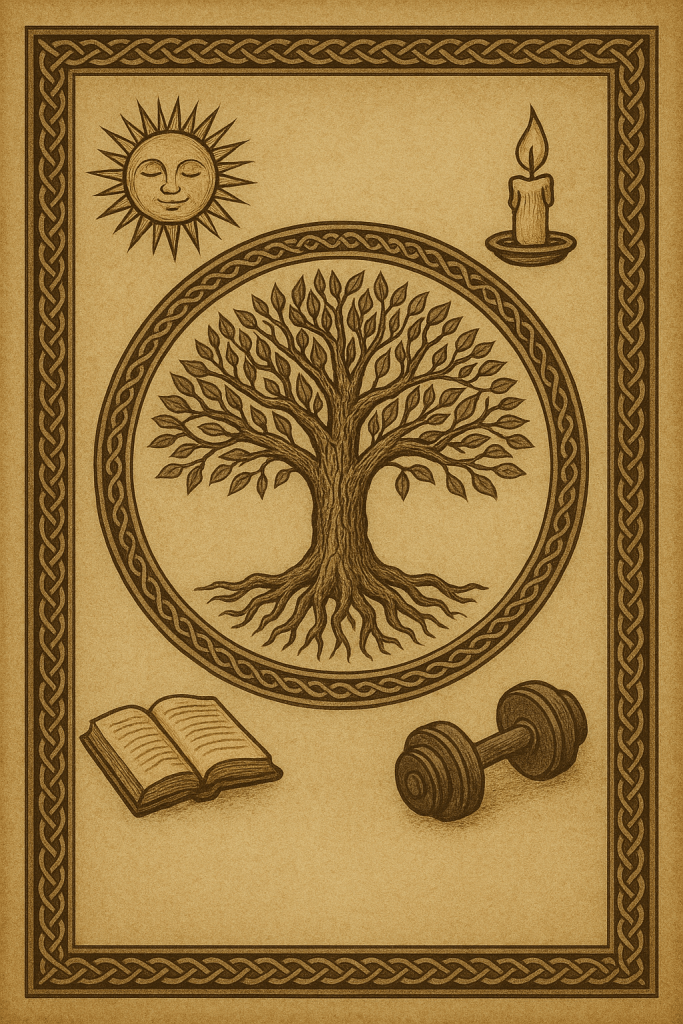
The following structured daily dedication practice was inspired by Gothi Bodvarr’s video at Northwoods Kindred. We thought it was a wonderful way to stay inspired by Norse mythology and have adapted it only slightly for The Way of Ash and Elm. Each day connects with its divine namesake and focuses on symbolic actions. The actions need not be elaborate—they are simple ways to stay connected to one’s practice and to remain mindful of oneself and of others.

Sol-Day (Sunday) – Joy & Vitality

Sólardag

Theme: Fueling the spirit and welcoming light.

  • Go outside and feel the sun on your skin.
  • Do something that brings happiness—play, art, music, laughter.
  • Reflect on one thing that sparked joy during the past week.

Máni-Day (Monday) – Reflection & Shadow Work

Mánadag

Theme: Introspection and emotional balance.

  • Spend time in meditation or quiet breathing.
  • Journal about fears, doubts, or unspoken thoughts.
  • Explore how your inner “shadows” can teach you self-compassion.

Týr-Day (Tuesday) – Service & Integrity

Týsdagr

Theme: Duty, honesty, and selflessness.

  • Do something that helps another person.
  • Practice honesty in speech and action.
  • Reflect: When have I set aside my own needs for the greater good?

Óðinn-Day (Wednesday) – Wisdom & Curiosity

Óðinsdagr

Theme: Learning and questioning.

  • Read something that expands your perspective.
  • Research a topic that fascinates you.
  • Ask yourself: What assumptions do I need to challenge?

Þórr-Day (Thursday) – Strength & Endurance

Þórsdagr

Theme: Physical well-being and resilience.

  • Engage in physical activity: exercise, hiking, or skill-building.
  • Do labor that grounds you in the physical world.
  • Reflect: How can I better protect and sustain my body?

Freyja/Frigg-Day (Friday) – Love & Kinship

Frjádagr

Theme: Connection with family, ancestors, and peace.

  • Spend time with loved ones (family or chosen family).
  • Share a meal or story.
  • Honor ancestors by remembering their lives or values.
  • Intentionally minimize conflict and cultivate harmony in the home.

Bathing-Day (Saturday) – Renewal & Maintenance

Laugardagr

Theme: Preparing the self and home for the cycle ahead.

  • Complete chores and responsibilities.
  • Clean your living space, bathe, and refresh your body.

Reflect: What do I need to clear away so the coming week flows smoothly?

Libation to the Nine Worlds

Libation to the Nine Worlds

Date: The 9th Day of Every Month

In the Norse worldview, Yggdrasil, the great World Tree, connects Nine Worlds. In a Humanistic Heathen context, these realms are not literal places, but poetic lenses through which we can view aspects of our world, our lives, and our relationships. A libation to the Nine Worlds becomes a ritual of gratitude and reciprocity, honoring the interconnectedness of all things.

This ritual was inspired by the Atheopagan libation ritual which is practiced every thirteenth day of every month (thirteen being an important number in Atheopaganism). It was designed to be simple, easily accomplished, and to cross cultural boundaries. We thought that the Way of Ash and Elm could also put to good use a libation ritual, albeit one a bit more lengthy. We felt that since nine was an important number in Norse mythology, the ritual could be done on the ninth of every month.

Below is just one suggested version ﹘ as always, feel free to shorten, change, or just improvise your own version. In the spirit of the Atheopagan libation ritual, don’t worry about everything being perfect. This is a ritual that will hopefully require little effort and take only a few minutes.

Monthly Ritual: Libation to the Nine Worlds

You’ll need:

  • A drink of your choice (mead, cider, herbal tea, water, etc.) in a horn, cup, or jug.
  • A place outdoors where you can pour safely onto soil or into water.

Stand or sit in a mindful posture, and for each world:

  • Speak its name.
  • Reflect on its symbolic meaning in the human and natural world.
  • Pour a small portion of the libation to the earth.

1. Midgard – The Human World

The realm of humanity, community, and the shared challenges of life.

“To Midgard, our home. For the bonds we share, the homes we build, the work of human hands, and the kindnesses that make life worth living.”

2. Asgard – The Realm of Ideals and Governance

The seat of the Æsir: here seen as symbols of law, leadership, and higher aspirations.

“To Asgard, the realm of vision and order. For our shared values, our hopes for justice, and the wisdom to lead with honor.”

3. Vanaheim – The Realm of Growth and Abundance

Home of the Vanir: symbols of fertility, harmony with nature, and sustainable living.

“To Vanaheim, the green realm. For the soil that nourishes us, the harvests that sustain us, and the beauty of the living earth.”

4. Jötunheim – The Realm of Wild Forces

Land of the Jötnar, representing untamed nature, challenge, and transformation.

“To Jötunheim, the wild realm. For the storms that test us, the mountains that humble us, and the untamed power that shapes the world.”

5. Alfheim – The Realm of Inspiration and Beauty

Home of the Light Elves, symbols of creativity, artistry, and joy.

“To Alfheim, the bright realm. For music and art, for laughter and play, and for the spark of creativity in all hearts.”

6. Svartalfheim – The Realm of Craft and Ingenuity

Home of the Dwarves: masters of skill, creation, and resilience.

“To Svartalfheim, the deep realm. For the makers, the builders, and the clever hands that shape the tools of our lives.”

7. Niflheim – The Realm of Ice and Memory

Land of cold mists, representing the past, reflection, and the stillness before change.

“To Niflheim, the realm of memory. For the lessons of the past, the ancestors who shaped us, and the quiet moments that teach us.”

8. Muspelheim – The Realm of Fire and Passion

Home of primal flame, symbolizing transformation, drive, and creation through destruction.

“To Muspelheim, the fiery realm. For the warmth that sustains life, the passion that fuels us, and the courage to embrace change.”

9. Helheim – The Realm of Rest and Release

The land of the dead, representing endings, acceptance, and the cycles of life.

“To Helheim, the realm of rest. For the peace that follows labor, the return of all things to the earth, and the memory of those we love.”

Closing

When the final portion is poured, say:

“The Nine Worlds are honored, the libation is poured, and the circle of giving is complete. May what we have shared return to us in new forms, and may we walk our days mindful of the web that binds us all.”

A Humanistic Heathen Sumbel

A Humanistic Heathen Sumbel

A sumbel is a ritual drinking ceremony in which participants speak in turn while passing a cup, horn, or other vessel. In traditional Heathenry, it often includes toasts to gods, ancestors, and heroes, along with oaths, boasts, and recitations. A Humanistic Heathen sumbel adapts this practice for those who see the gods as symbols and stories rather than supernatural beings, focusing instead on shared values, community bonds, and the human experience.

How It Differs from a Traditional Heathen Sumbel

  • Symbolic rather than literal theology: A traditional Heathen sumbel may include toasts to gods as literal beings; in a humanistic heathen sumbel, these toasts are understood symbolically, as evoking ideals, virtues, or cultural stories.
  • Inclusivity in focus: Rather than assuming shared belief in the supernatural, this version is built to welcome atheists, agnostics, and theists alike, as long as they honor the ritual’s spirit of respect and sincerity.
  • Broader interpretation of oaths: While traditional oaths may be sworn before gods and ancestors, in this version they are commitments made to oneself and to the community’s shared memory.
  • Emphasis on human connection: The central purpose is strengthening human bonds, fostering gratitude for the past, solidarity in the present, and shared hope for the future.

Nevertheless, in The Way of Ash and Elm we retain some traditional aspects of the sumbel that we feel help to keep alive the sacred spirit of the ritual. Firstly, our drink of choice is still mead. Secondly, after each round we pour a bit of the mead into a ritual bowl. The bowl symbolizes our group’s luck and bond, and when the ritual is over we offer its contents to the land by pouring it onto the earth, symbolically honoring the local landvættir.

In our Winter Finding celebration of 2024 we held a large sumbel that included mostly college educated atheists, including trained scientists. For most it was their first encounter with Heathenry, humanistic or otherwise. The unanimous feedback from all who participated was that the sumbel was a powerful shared experience for them, one they could not soon forget.

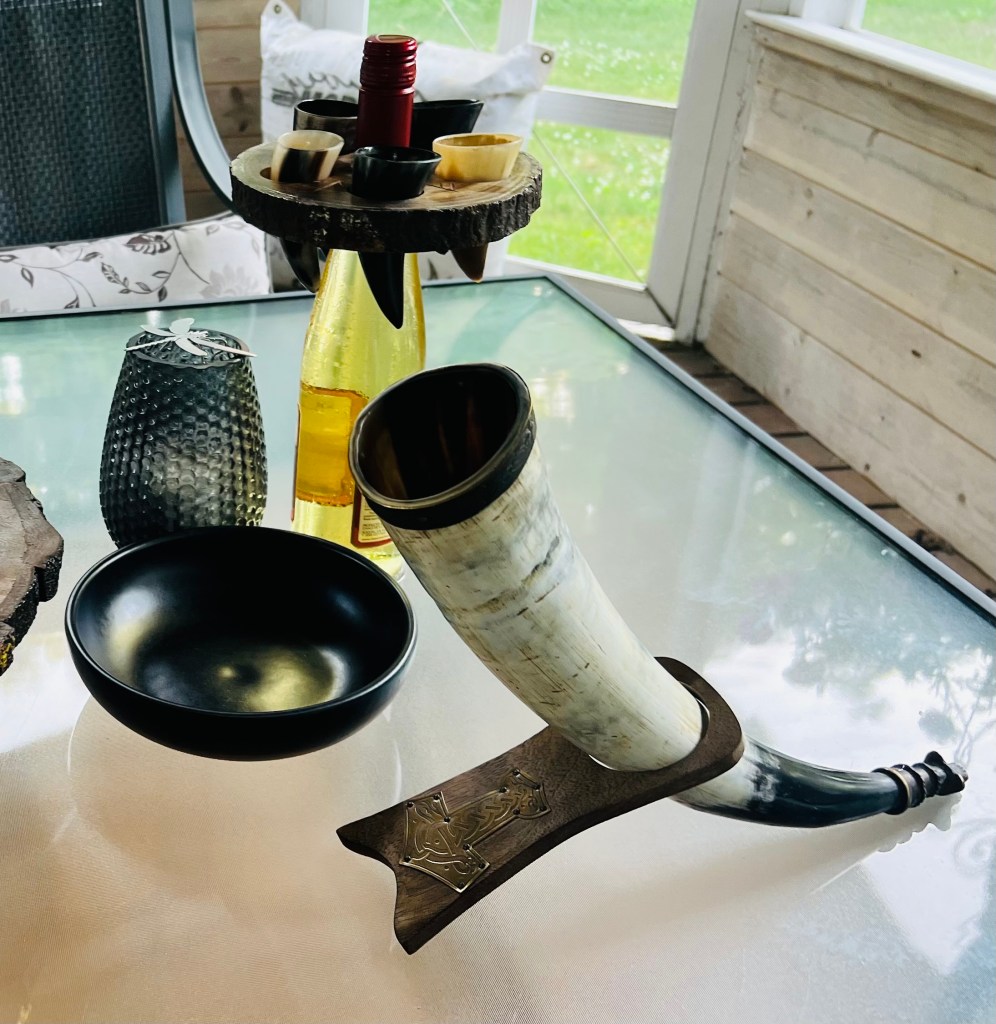
Horn, bowl, and mead ready for a Midsummer sumbel.

The Sumbel: Past, Present, and Future

In our version, the sumbel is divided into three rounds, each representing a different relationship with time:

Opening Words

Facilitator speaks:

“We gather together in the spirit of sumbel—an ancient custom of passing the cup and speaking from the heart.

In our way, we honor the threads of time that bind us: the past that shaped us, the present we share, and the future we will help to weave.

As the horn passes, each person will speak in turn. You may share a memory, a thought, a boast, or a promise. Speak with sincerity, for the words we share here will be remembered.”

(For a more mythical opening that honors Odin, see below)

First Round – The Past

The cup is passed in honor of those who came before: ancestors, historical figures, mentors, or cultural influences that shaped the community. People may share stories about loved ones who have died, read a meaningful poem, or reflect on moments from history that inspire them. The focus is on memory, gratitude, and recognizing the lessons of the past.

Facilitator:

“We begin with the past. As you take the cup, honor those who came before: ancestors, mentors, friends, and figures whose lives still inspire us.

Speak their names, tell their stories, and share the lessons they left behind.”

(Horn is passed around. Each participant shares. Drink is offered to the bowl.)

Second Round – The Present

This round honors those gathered in the here and now. Participants may toast to the group as a whole, praise one another’s accomplishments, or share personal victories and challenges. It’s also a chance for boasting in the best sense: acknowledging one’s own work, creativity, or acts of kindness without shame. The aim is to strengthen community ties through mutual recognition and encouragement.

Facilitator:

“Now we turn to the present. This round is for honoring those here today, and for recognizing the work and worth of ourselves and each other.

Share your victories, your gratitude, or the things you are proud of. We boast not to diminish others, but to lift one another up.”

(Horn is passed around. Each participant shares. Drink is offered to the bowl.)

Third Round – The Future

This is the round for looking ahead. Participants may speak of upcoming plans, goals, or commitments—both personal and communal. Oaths may be made, not to supernatural forces, but to one’s own integrity and the support of the community. These words carry weight; by speaking them aloud, participants invite others to witness and encourage their fulfillment.

Facilitator:

“Finally, we speak to the future. This is the time for sharing hopes, plans, and oaths. An oath in this hall is a promise to yourself and to this community.

Let your words carry weight, for they will live on in the memory of those who hear them.”

(Horn is passed around. Each participant shares. Drink is offered to the bowl.)

Closing Words

Facilitator:

“The cup has made its journey through the three realms of time: past, present, and future. May we remember the lessons of the past, act with honor in the present, and work toward a future worth toasting.

The sumbel is ended, but its spirit continues in how we live from this day forward.”

(The bowl’s contents are respectfully poured onto the earth.)

(Optional) A Mythical Opening: Odin’s Ravens

Facilitator: 

“We perform this sumbel through Odin’s inspiration. Odin, Allfather of the Aesir. Odin, who shaped the earth with the corpse of Ymir. Odin, who gave his eye to the well of Mimir that he might drink from it and learn wisdom. Odin, who hung from Yggdrasil for nine windy nights, impaled by his own spear, sacrificed himself to himself, wailing in agony, so that he might learn the secrets of the runes. Odin, who seduced Gunnlöd for three nights so that he might steal the mead of poetry. Odin, lord of the Valkyries, host of Valholl, father to Thor, Baldr, Vithar and Vali. Odin, Shield Shaker, Evil Worker, Spearman, Lord of the Undead, Dweller in Frigg’s Embrace, Gallows’ Burden, Ancient One, Wanderer, Gore Master, Swift in Deceit, Maddener, Wise in Magical Spells, Goði of the Raven-Offering, God of the Hanged, Teacher, Hoary Beard, High One, Glad of War, Battle Wolf, Screamer, Wayfinder, One-Eyed, Raven God, Roarer, Yule Father, God of Runes, Finder of Truth, Victory Giver, Foe of the Wolf, Chooser of the Slain, Smith of Battle, Terrible One.

Each day Odin sends out his ravens, Huginn (“Thought”) and Muninn (“Memory”), to fly across the lands and then return at night to report back to him what they learned. In the Poetic Edda poem Grímnismál, Odin states:

Hugin and Munin fly each day

over the spacious earth.

I fear for Hugin, that he come not back,

yet more anxious am I for Munin.

The ravens can be seen to symbolize many things, but clearly Odin expresses an anxiety that intellect and, more so, knowledge of the past might be lost to him. Memory allows us to learn from the past and to give honor to those who came before, and thought allows us to understand the present and imagine the future. By using Odin as our inspiration, and his ravens as our guide, our sumbel will move through three stages, each involving the passing and drinking of the mead. The themes will be past, present, and future.”

Blog at WordPress.com.

Up ↑