
A Humanistic Heathen Sumbel
A sumbel is a ritual drinking ceremony in which participants speak in turn while passing a cup, horn, or other vessel. In traditional Heathenry, it often includes toasts to gods, ancestors, and heroes, along with oaths, boasts, and recitations. A Humanistic Heathen sumbel adapts this practice for those who see the gods as symbols and stories rather than supernatural beings, focusing instead on shared values, community bonds, and the human experience.
How It Differs from a Traditional Heathen Sumbel
- Symbolic rather than literal theology: A traditional Heathen sumbel may include toasts to gods as literal beings; in a humanistic heathen sumbel, these toasts are understood symbolically, as evoking ideals, virtues, or cultural stories.
- Inclusivity in focus: Rather than assuming shared belief in the supernatural, this version is built to welcome atheists, agnostics, and theists alike, as long as they honor the ritual’s spirit of respect and sincerity.
- Broader interpretation of oaths: While traditional oaths may be sworn before gods and ancestors, in this version they are commitments made to oneself and to the community’s shared memory.
- Emphasis on human connection: The central purpose is strengthening human bonds, fostering gratitude for the past, solidarity in the present, and shared hope for the future.
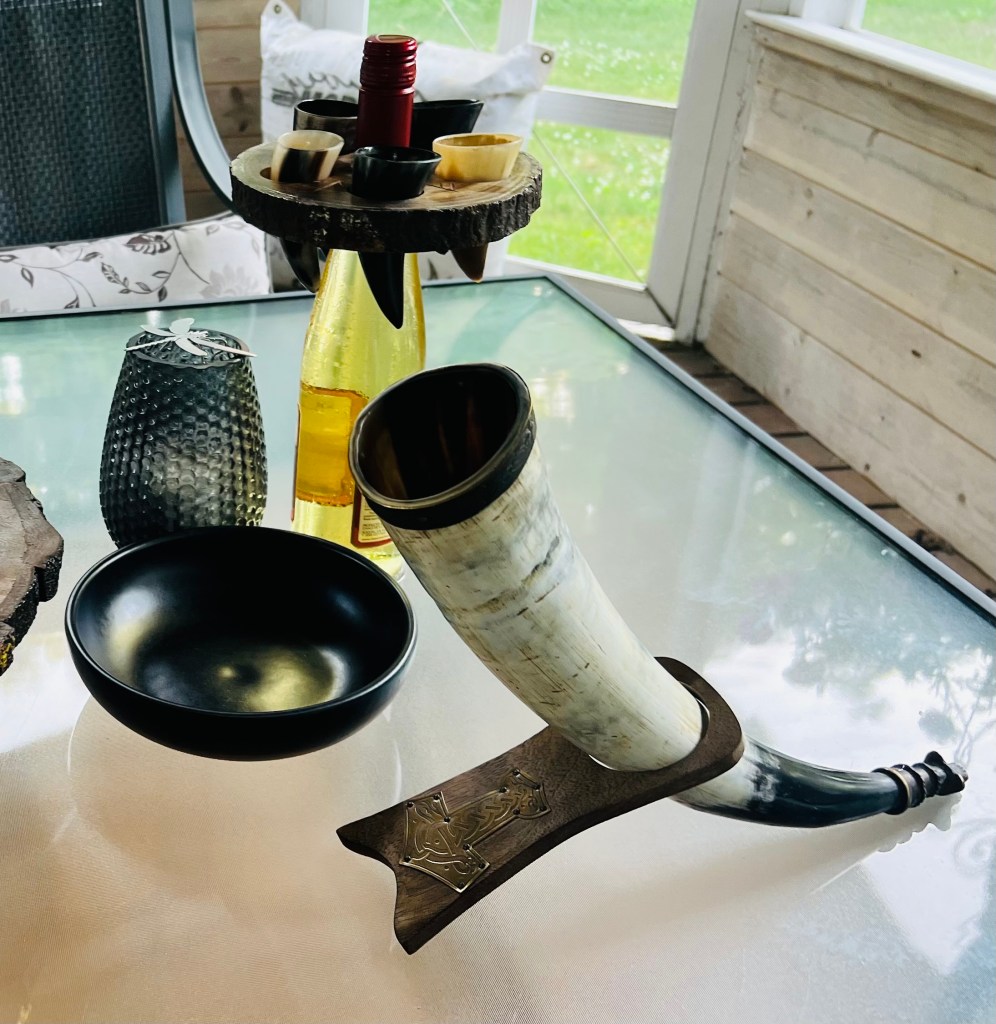
Nevertheless, in The Way of Ash and Elm we retain some traditional aspects of the sumbel that we feel help to keep alive the sacred spirit of the ritual. Firstly, our drink of choice is still mead. Secondly, after each round we pour a bit of the mead into a ritual bowl. The bowl symbolizes our group’s luck and bond, and when the ritual is over we offer its contents to the land by pouring it onto the earth, symbolically honoring the local landvættir.
In our Winter Finding celebration of 2024 we held a large sumbel that included mostly college educated atheists, including trained scientists. For most it was their first encounter with Heathenry, humanistic or otherwise. The unanimous feedback from all who participated was that the sumbel was a powerful shared experience for them, one they could not soon forget.
The Sumbel: Past, Present, and Future
In our version, the sumbel is divided into three rounds, each representing a different relationship with time:
Opening Words
Facilitator speaks:
“We gather together in the spirit of sumbel—an ancient custom of passing the cup and speaking from the heart.
In our way, we honor the threads of time that bind us: the past that shaped us, the present we share, and the future we will help to weave.
As the horn passes, each person will speak in turn. You may share a memory, a thought, a boast, or a promise. Speak with sincerity, for the words we share here will be remembered.”
(For a more mythical opening that honors Odin, see below)
First Round – The Past
The cup is passed in honor of those who came before: ancestors, historical figures, mentors, or cultural influences that shaped the community. People may share stories about loved ones who have died, read a meaningful poem, or reflect on moments from history that inspire them. The focus is on memory, gratitude, and recognizing the lessons of the past.
Facilitator:
“We begin with the past. As you take the cup, honor those who came before: ancestors, mentors, friends, and figures whose lives still inspire us.
Speak their names, tell their stories, and share the lessons they left behind.”
(Horn is passed around. Each participant shares. Drink is offered to the bowl.)
Second Round – The Present
This round honors those gathered in the here and now. Participants may toast to the group as a whole, praise one another’s accomplishments, or share personal victories and challenges. It’s also a chance for boasting in the best sense: acknowledging one’s own work, creativity, or acts of kindness without shame. The aim is to strengthen community ties through mutual recognition and encouragement.
Facilitator:
“Now we turn to the present. This round is for honoring those here today, and for recognizing the work and worth of ourselves and each other.
Share your victories, your gratitude, or the things you are proud of. We boast not to diminish others, but to lift one another up.”
(Horn is passed around. Each participant shares. Drink is offered to the bowl.)
Third Round – The Future
This is the round for looking ahead. Participants may speak of upcoming plans, goals, or commitments—both personal and communal. Oaths may be made, not to supernatural forces, but to one’s own integrity and the support of the community. These words carry weight; by speaking them aloud, participants invite others to witness and encourage their fulfillment.
Facilitator:
“Finally, we speak to the future. This is the time for sharing hopes, plans, and oaths. An oath in this hall is a promise to yourself and to this community.
Let your words carry weight, for they will live on in the memory of those who hear them.”
(Horn is passed around. Each participant shares. Drink is offered to the bowl.)
Closing Words
Facilitator:
“The cup has made its journey through the three realms of time: past, present, and future. May we remember the lessons of the past, act with honor in the present, and work toward a future worth toasting.
The sumbel is ended, but its spirit continues in how we live from this day forward.”
(The bowl’s contents are respectfully poured onto the earth.)
(Optional) A Mythical Opening: Odin’s Ravens
Facilitator:
“We perform this sumbel through Odin’s inspiration. Odin, Allfather of the Aesir. Odin, who shaped the earth with the corpse of Ymir. Odin, who gave his eye to the well of Mimir that he might drink from it and learn wisdom. Odin, who hung from Yggdrasil for nine windy nights, impaled by his own spear, sacrificed himself to himself, wailing in agony, so that he might learn the secrets of the runes. Odin, who seduced Gunnlöd for three nights so that he might steal the mead of poetry. Odin, lord of the Valkyries, host of Valholl, father to Thor, Baldr, Vithar and Vali. Odin, Shield Shaker, Evil Worker, Spearman, Lord of the Undead, Dweller in Frigg’s Embrace, Gallows’ Burden, Ancient One, Wanderer, Gore Master, Swift in Deceit, Maddener, Wise in Magical Spells, Goði of the Raven-Offering, God of the Hanged, Teacher, Hoary Beard, High One, Glad of War, Battle Wolf, Screamer, Wayfinder, One-Eyed, Raven God, Roarer, Yule Father, God of Runes, Finder of Truth, Victory Giver, Foe of the Wolf, Chooser of the Slain, Smith of Battle, Terrible One.
Each day Odin sends out his ravens, Huginn (“Thought”) and Muninn (“Memory”), to fly across the lands and then return at night to report back to him what they learned. In the Poetic Edda poem Grímnismál, Odin states:
Hugin and Munin fly each day
over the spacious earth.
I fear for Hugin, that he come not back,
yet more anxious am I for Munin.
The ravens can be seen to symbolize many things, but clearly Odin expresses an anxiety that intellect and, more so, knowledge of the past might be lost to him. Memory allows us to learn from the past and to give honor to those who came before, and thought allows us to understand the present and imagine the future. By using Odin as our inspiration, and his ravens as our guide, our sumbel will move through three stages, each involving the passing and drinking of the mead. The themes will be past, present, and future.”
 The Way of Ash and Elm
Leave a comment