
Lokabrenna
Date: Late July – Early August
In the fire of mischief, we burn away the false and forge the real.
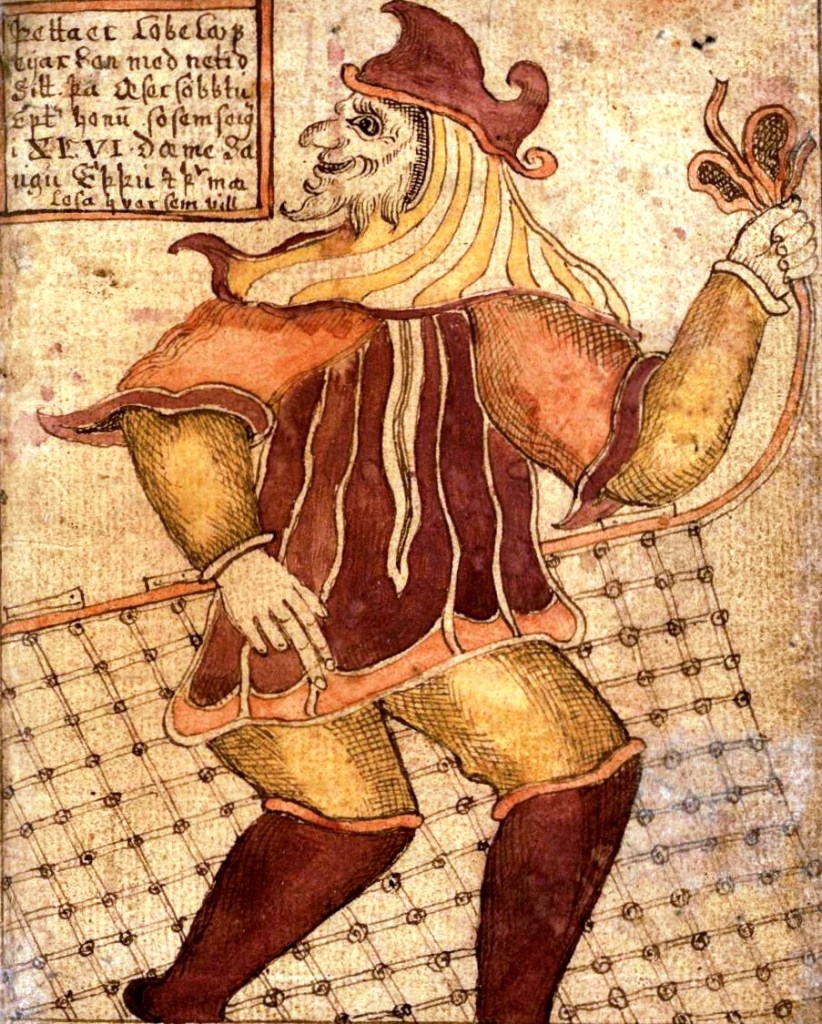
Lokabrenna is a modern heathen (or heathen-adjacent) holiday with origins in contemporary Norse-inspired paganism. It honors Loki, the trickster god of Norse mythology, and is celebrated by some practitioners of modern Heathenry, Lokeans , and others who appreciate Loki’s role in myth and transformation. The name Lokabrenna means “Loki’s burning” or “Loki’s torch” in Old Norse–inspired form (“brenna” is to burn or blaze). Interestingly, Lokabrenna is also an Icelandic name for the Dog Star Sirius, the brightest star in the night sky. So the name carries a double meaning, as a poetic reference to heat, fire, and Loki, and as an astronomical marker (like the Dog Days of Summer). Though scholars debate whether Loki was historically associated with fire, modern Heathens have generally accepted him as such.
Lokabrenna is not an ancient Norse holiday. It is a modern invention, likely dating from the early 21st century, shaped by both the growing acceptance of Loki within modern Heathen and Pagan traditions and by online communities (such as Tumblr, Discord, and forums) where Loki-devotees shared rituals, art, and ideas. Though there’s no single originator, Lokean communities embraced Lokabrenna as a time to honor Loki’s positive qualities: change, chaos, humor, liberation, and growth through challenge.
There is no set date for celebrating Lokabrenna. As it’s astronomically tied to the rising of Sirius, the Dog Star (linked with the Icelandic “Lokabrenna”), the day could typically fall between August 1–7, making the first week of August a flexible, festive period. The date is also near The Dimming, the first harvest festival. This seasonal timing potentially links Loki’s fire to the ripening heat of summer, transformation, and even sacrifice or breakthrough. However, many Lokeans have dedicated the month of July to Loki, so placing a celebration during this time is also reasonable. As this is a brand new holiday meant to honor a trickster, a steadfast date hardly seems appropriate and one should, as always, feel free to do what one wishes.
For an atheopagan, celebrating Lokabrenna can be a powerful, symbolic way to honor transformation, chaos, liberation, humor, and personal authenticity—all values often associated with the mythic figure of Loki, even without literal belief in the deity. In addition, incorporating Sigyn into an atheopagan Lokabrenna celebration adds a powerful and often-overlooked counterbalance to Loki’s chaos: devotion, endurance, grief, compassion, and quiet strength. While Loki embodies transformation through disruption, Sigyn represents transformation through steadfast love, grief-work, and quiet resilience. Where Loki represents the spark of change, Sigyn is the still center that remains through the storm.
Modern Lokabrenna celebrations are diverse, but often include:
- Lighting candles or fires in Loki’s honor
- Feasting, especially spicy foods or foods with symbolic meaning (e.g. red or fiery)
- Jokes, pranks, or games in tribute to Loki’s wit
- Storytelling, particularly of Loki’s myths
- Devotional art, poetry, or journaling
- Self-reflection on personal transformation, shadow work, or embracing the unexpected
It can also be a time for:
- Queer celebration (Loki is often honored as a queer/trans figure by modern devotees)
- Standing with the marginalized
- Breaking personal or societal norms
Themes: Transformation, chaos, liberation, humor, and personal authenticity
Correspondences
Deities: Loki, Sigyn, Odin
Foods: Sponge cake, spicy food, cinnamon, weird candy
Drinks: Fireball Whiskey, strong caffeinated beverages (e.g. energy drinks)
Colors: Green, red, copper
Note: The following ritual was inspired by and adapted from rituals found in Lea Svendnsen’s Loki devotional, Loki and Sigyn: Lessons on Chaos, Laughter & Loyalty from the Norse Gods (Llewellyn Publications, 2002).
I. Group Ritual: Burdens and Laughter
Here is a three-round blót ritual honoring Sigyn and Loki, balancing solemn compassion, self-responsibility, and joyful chaos.
Themes: Burden, reckoning, and release
Setting and Preparation: Hold the ritual around a fire or candle-lit circle. Prepare a bowl (representing Sigyn’s burden), and a drinking horn or cup for the sumbel. The liquid in the bowl can be mead, wine, herbal tea, or water. The horn for the second round should be something festive.
Opening
Leader:
“We gather in the shadows and the sparks. To honor Sigyn, the silent strength beside the suffering. To face the chaos we’ve kindled in our own lives. And to lift our voices in laughter with Loki, who stirs the embers and dances in flame.
Tonight, we offer three rounds— One to ease the burden, One to face what must be changed, One to celebrate the unchained spirit.
Through it, we will fashion a bridge between Sigyn’s quiet endurance and Loki’s chaotic mirth. Let us begin.”
Round One: Sigyn’s Bowl – Easing the Burden
Leader holds up the bowl:
“This is the bowl of Sigyn, who catches each drop of poison. She teaches us patience, love, and quiet strength. May this round ease her burden—and our own. May the weight we carry be lightened, and may compassion flow between us.”
Passing the Bowl
Each participant takes the bowl in turn. They may choose to sip, pour a little on the earth/fire, or raise the bowl silently. Each person may say a few words or simply reflect quietly.
Example prompts:
- “To Sigyn, may your strength become ours.”
- “I offer release from this sorrow…”
- “In easing your burden, I ease my own.”
After the final person drinks or pours, the leader offers any remainder to the fire or earth, saying:
“This final measure, to Sigyn, who waits and endures.”
Round Two: The Reckoning – Facing What We’ve Made
Leader:
“Between suffering and joy, there is the work. Loki’s tales often end in trouble—but they begin in choice. Each of us carries fires we’ve lit: sharp words, broken promises, ignored truths. This round is for naming what must be changed. You need not confess to others—but speak truth to yourself. What have you broken? What can you mend?”
Reckoning Ritual
You may prepare slips of paper and pencils. Participants can write something they wish to release or change—something they caused or helped cause. Each slip is then offered to the fire, or symbolically torn and buried if fire is not present.
Optional spoken prompts as each person acts:
- “I see what I’ve made—and what I will make anew.”
- “Loki, may my flames forge change.”
- “Sigyn, may I steady my hand in the fixing.”
Round Three: Loki’s Sumbel – Laughter Through the Flame
Leader:
“Now we turn to Loki—breaker of chains, stirrer of stories, god of laughter and of loss. He reminds us that in the face of suffering, there is still hope. That laughter is a medicine that can heal wounds of discontent and misunderstanding.”
The horn or cup is raised.
“Let us share mirth, mischief, and memories. Tell a joke, a ridiculous story, a moment of unexpected joy. Toast to the ones who make us laugh, even when we shouldn’t. This is the way of Loki.”
Passing the Horn
Each person takes the horn and may:
- Share a joke.
- Tell a funny or mischievous personal story.
- Toast someone who brings lightness to their life.
- Laugh heartily and say, “To Loki!”
If someone doesn’t want to share, they may simply say: “To Loki, the fire that never dies.”
Closing Words
Leader:
“We have held the bowl and passed the horn. We have honored grief and honored joy. May we walk away lighter, fiercer, and more open to the strange beauty of the world. Hail Sigyn, the constant. Hail Loki, the ever-shifting.”
Remember to symbolically offer the remains of the horn or cup to the land spirits.
II. Additional Activities
Rituals
Fire Ritual: Burn What Binds You
- Use fire symbolically to represent transformation:
- Write down a habit, fear, self-limiting belief, or societal norm you wish to let go of.
- Light a candle or small fire and burn the paper (safely).
- Speak aloud: “In the fire of change, I am freed.”
- This act mirrors Loki’s chaotic but necessary role in burning away stagnation.
Candle Meditation: The Dancing Flame
- Loki as a flame can represent constant motion and unpredictability.
- Light a single candle.
- Watch it dance and flicker.
- Reflect on what in your life is in motion, unstable, or growing.
- Ask: How can I dance with the flame instead of trying to extinguish it?
Create an Archetype Focus
- Build a focus to Loki as a symbolic force, not a literal being:
- Use objects that evoke mischief, change, fire, serpents, masks, or thresholds.
- Include quotes about chaos, transformation, or liberation.
- Use it as a focus for meditation, reflection, or gratitude for life’s beautiful messiness.
Recreation
Chaos and Humor Offering
- Loki is a bringer of disruption, humor, and irreverence. Honor that by:
- Telling jokes or reading satirical stories.
- Watching absurd or surreal comedy.
- Making playful or ironic offerings (e.g., mismatched socks, rubber chickens, “sacrificial” spicy peppers).
- Reflect on how humor helps you cope with or challenge the absurdity of life.
Celebrate Queerness and Rebellion
- Many modern devotees honor Loki as a queer, genderfluid, and boundary-breaking figure. Celebrate the freedom to be nonconforming, liminal, or strange.
- Attend or support LGBTQ+ events or charities.
- Dress or express yourself in a way that challenges binary expectations.
Stargazing and the Dog Star (Sirius)
- Since Lokabrenna is an Icelandic name for Sirius, incorporate some skywatching:
- Watch the heliacal rising of Sirius, if visible from your location.
- Sit under the stars and reflect on endurance through heat and hardship, and how light emerges even from chaotic energy.
Ritual of Reversal
- Much like Saturnalia or Fool’s Day, you can set aside a time to reverse norms. It’s about getting uncomfortable in playful ways, and learning from that discomfort:
- Let someone else lead if you usually take charge.
- Wear something backwards or inside out.
- Eat dessert first.
- Make a toast to uncertainty.
Personal Growth
Personal Shadow Work
- Loki’s mythic arc often reflects the shadow self, the rejected or hidden aspects of who we are. Journal or meditate on:
- What parts of myself do I hide or repress?
- Where do I fear being “too much”?
- What have I been punished or shamed for that might actually be a strength?
- Invite these parts into awareness, not to fix them, but to acknowledge and integrate them.
The Bowl That Catches the Poison
- In mythology, Sigyn catches the venom dripping onto Loki with a bowl, embodying devotion amid suffering. Place a bowl on your altar or ritual space. Let it represent all you (or others) have carried silently.
- Write down emotional burdens: yours or those you’ve witnessed others endure.
- Place those slips in the bowl as a symbolic act of witnessing and honoring unseen labor or suffering.
- Then reflect: Who holds the bowl in your life? Whose bowl can you help hold?
Grief-Witnessing and Ritual Mourning
- Sigyn is a goddess of grief and endurance, and that makes her deeply relevant to atheopagans exploring emotional honesty and mourning. Create a safe space to reflect on personal or collective grief (e.g. climate grief, injustice, personal loss).
- Light a candle in Sigyn’s honor while journaling or simply sitting with that grief.
- Optionally, pour a small libation of water or wine to the earth as a symbolic offering.
- You might recite: “I witness the weight you carry. I honor the love that endures even through sorrow.”
Write a Letter to Your Past or Wounded Self
- Sigyn’s energy is gentle witnessing, the part of you that says, “I see what you went through. I’m here.” Write a letter to a younger version of yourself who was struggling, grieving, or feeling alone.
- Offer the kind of patience and presence Sigyn represents.
- Seal the letter or burn it in the candle flame, letting go or honoring that memory.
Charitable Action
Disruptive Acts of Kindness
- Channel Loki’s disruptive nature into positive subversion. This frames chaos as a tool of liberation and compassion:
- Do something that “breaks the rules” for a good cause.
- Tip outrageously.
- Buy coffee for strangers.
- Guerrilla-garden an ugly patch of public land.
- Post anonymous encouragement in hostile online spaces.
Devotional Acts of Care
- Sigyn teaches the sacredness of quiet caregiving, especially the kind that goes unrecognized. Do something caring for someone without drawing attention to yourself: cook a meal, clean a space, write a note of kindness.
- Or do something restorative for yourself: rest without guilt, nurture your inner world.
- Honor devotion not for applause, but as a sacred act of being human.
Acts of Steadfast Solidarity
- Honor Sigyn by standing quietly with those who are hurting, misjudged, or silenced:
- Volunteer in care-related roles (mental health, elder care, mutual aid).
- Support a friend through a hard time without needing to “fix” anything.
- Publicly support marginalized communities while also privately sustaining long-term efforts.
 The Way of Ash and Elm
Leave a comment